Source Handmade Modern Love Resin Tray for Home Decor, Gifts, and Events
Explore 30 listings for the handmade modern love resin tray, comparing options for home decor, gifts, and events. Buyers can review specifications, materials, and customization features to find the right supplier for their needs.
Key considerations
Products List






Comprehensive Sourcing Guide
Strategic Sourcing Guide for Handmade Modern Love Resin Trays
The global market for decorative home accessories has seen a significant surge in demand for items that blend artisanal craftsmanship with contemporary aesthetics. Buyers searching for "handmade modern love resin tray" are often looking for products that serve as both functional serving ware and sentimental decorative pieces. However, a critical examination of the current supply landscape reveals a distinct divergence between the specific keyword requested and the actual available inventory data. While the search term emphasizes resin and a specific "love" motif, the verified product attributes in the current market dataset point primarily to solid wood, bamboo, and pulp-molded materials. This guide provides a disciplined approach to sourcing, highlighting the necessity of verifying material composition, understanding the distinction between resin and wood-based alternatives, and establishing rigorous quality control protocols for handmade decorative items.
Material Verification and Product Composition
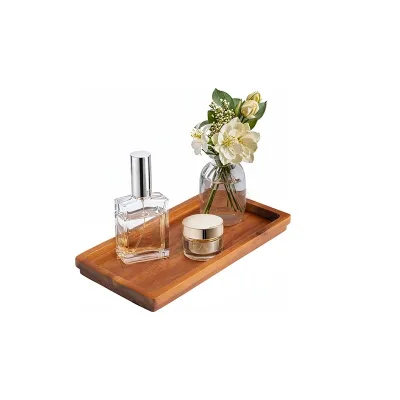
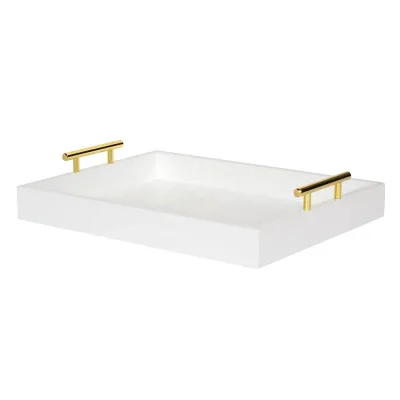
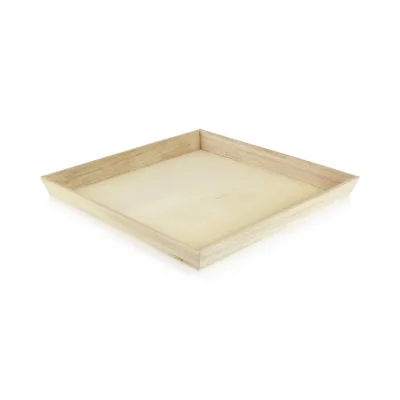
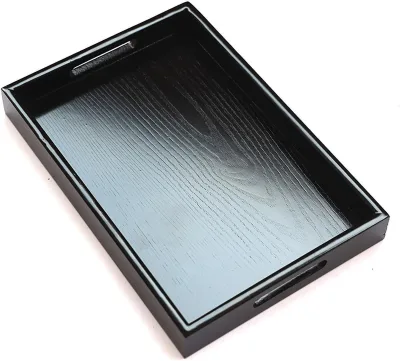
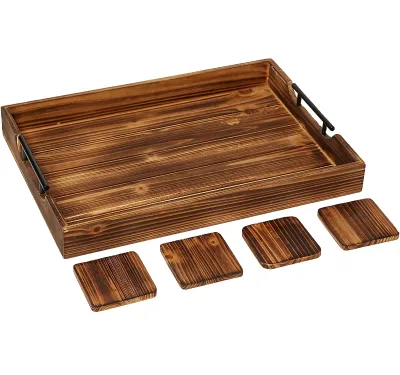
The most immediate challenge in sourcing a "resin tray" based on the provided market data is the prevalence of wood and bamboo materials. The observed product attributes explicitly list "Solid Wood," "Bamboo," and "Bamboo & Wood" as the primary materials. Furthermore, specific product models such as the "Wooden Serving Tray" and items with the model number "R-AC12522" are categorized under these natural materials. While the keyword specifies resin, the actual supply chain data indicates that "Handmade Wooden Decoration storage Trays Serving" are the dominant offerings.
Buyers must exercise extreme caution when interpreting product listings. If a supplier claims to offer a resin tray, the buyer must request physical samples to verify the material composition, as the dataset suggests that many "modern" trays are actually crafted from solid wood or bamboo. The "Natural Color" and "Natural Wood" attributes observed in the data reinforce the dominance of organic materials in this category. A "modern love" design might be achieved through wood carving, laser engraving, or the application of resin inlays, but the base material is frequently wood. The "Process" attributes of "Polishing" and "Handmade/Other" suggest that the finish is critical, but the core substrate remains natural.
Technical Specifications and Customization Parameters
When evaluating technical specifications for handmade trays, whether wood or resin, the data highlights a strong emphasis on customization. The attribute "Customization: Available" and "Design: Customizable" are recurring themes. Buyers should expect that standard sizes may be limited, with many suppliers offering "Custom" sizes or specific dimensions like "33173.5cm" as a standard reference point. The "Size: Custom" and "Model Number: T2" or "Custom made" entries indicate that the market is highly flexible regarding dimensions.
Packaging standards vary significantly across the observed inventory. Some products are shipped in "1set/Carton" or "OPP Bag + Box," while others utilize "Carton/Palletizing" for larger orders. The "Single package size" of "30X20X10 cm" and a "Single gross weight" of "0.500 kg" provide a baseline for logistics planning, but these figures will fluctuate based on the specific material and customization. For resin products, which are often heavier than wood, buyers must verify the weight specifications individually. The "Lid Type: Without Lid" and "Cutlery Storage Method: Built-in Storage" attributes suggest that functionality is a key design driver, with some trays designed to hold cutlery or other items securely.
Compliance, Certification, and Safety Standards
For any product intended for food contact or general home use, compliance with safety standards is non-negotiable. The dataset mentions "Usage: Food" and "Usage: Egg" for certain items, implying that some trays in this category are approved for direct food contact. However, the "Disposable: Non-Disposable" and "Disposable: Disposable" attributes show a split in the market between reusable and single-use items. A "handmade modern love resin tray" intended for home decoration or gift-giving must be evaluated for chemical safety, particularly if it involves resin, which can contain volatile organic compounds (VOCs) if not properly cured.
Buyers must verify that the supplier adheres to relevant international standards for food safety and material toxicity. While the provided data does not list specific certification numbers (such as FDA, LFGB, or BPA-free), the presence of "Food" usage attributes necessitates that the buyer explicitly request proof of compliance. For wooden items, the "Polishing" process must ensure that no harmful finishes are used that could leach into food. The "Standard: 33173.5cm" entry refers to dimensions rather than a safety standard, so buyers should not assume this dimension implies a specific regulatory approval. Instead, the buyer should request a Certificate of Analysis (CoA) or a test report from an accredited laboratory to confirm that the resin or wood finish meets the safety requirements of the destination market.
Cost Drivers and Pricing Dynamics
The observed price range of $0.03 to $50 USD reflects the vast diversity in the product category, from low-cost disposable bamboo chopsticks to high-end solid wood decorative boxes. For a "handmade modern love resin tray," the cost will likely fall toward the higher end of this spectrum due to the labor-intensive nature of "Handmade" production and the material costs associated with high-quality resin. The "MOQ range: 10-5000" indicates that suppliers are willing to accommodate small batches, which is typical for custom, handmade items. However, the unit price will decrease significantly as the order volume increases, with the lower MOQs often commanding a premium per unit.
Shipping costs are another critical cost driver. The "Shipping: Sea Shipping, Air Shipping" options suggest that buyers can choose based on urgency and budget. Sea shipping is generally more cost-effective for large orders, while air shipping is necessary for urgent, smaller batches. The "Location: Shandong China" and "Origin: China" entries indicate that the majority of suppliers are based in China, which is a major manufacturing hub for both wood and resin products. Buyers should factor in import duties and logistics costs when calculating the total landed cost, as the "Single gross weight" of 0.500 kg per unit can add up quickly in large shipments.
Supplier Evaluation and Quality Control
Evaluating suppliers for handmade items requires a focus on craftsmanship and consistency. The "Brand Name: MOONMAN" and "Product Name: Handmade Wooden Decoration storage Trays Serving" entries suggest that some suppliers have established brand identities, which can be a proxy for reliability. However, the presence of "Customizable" designs means that quality control must be rigorous for every order. Buyers should request pre-production samples to verify the "Design: Customizable" aspect and ensure that the "Love" motif is executed correctly.
Quality control protocols should include visual inspections for surface defects, such as bubbles in resin or splinters in wood. The "Process: Pulp Moulding" and "Process: Handmade/Other" attributes indicate that different manufacturing techniques are at play, each with its own quality risks. For resin trays, the curing process is critical; incomplete curing can lead to sticky surfaces or structural weakness. For wood trays, the "Polishing" process must be consistent to ensure a smooth finish. Buyers should implement a third-party inspection service for production runs, especially for orders exceeding the typical "MOQ" of 10 units, to ensure that the final product matches the approved sample.
Typical Applications and Market Positioning
The "Usage" attributes observed in the data include "Personal Decoration," "Collection," "Home Decoration," "Gift," "Daily Use," "Party," "Outdoor," and "Food." This wide range of applications suggests that the "handmade modern love resin tray" can be positioned in multiple market segments. As a "Gift," the item can leverage the "Love" theme for romantic occasions or anniversaries. As a "Home Decoration," it serves as a stylish accent piece for living rooms or entryways. The "Collection" attribute indicates that some buyers may purchase these items as part of a curated set of decorative objects.
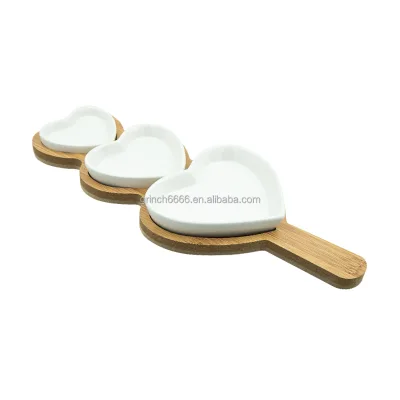
The "Style: Simple" and "Color: Natural Color" attributes suggest that the market trend favors minimalist designs that blend seamlessly with modern interiors. However, the "Love" motif in the keyword implies a need for specific design elements that may deviate from the "Simple" style. Buyers should clarify whether the "Love" theme is subtle (e.g., a heart-shaped cutout) or prominent (e.g., a large heart design) to ensure the product meets the target audience's expectations. The "Application Scenarios: General" entry confirms that these trays are versatile, suitable for both indoor and outdoor use, provided the material is weather-resistant.
Long-Term Procurement Considerations
Sourcing handmade items involves long-term considerations regarding supply chain stability and scalability. The "Sample: Yes" attribute indicates that suppliers are generally willing to provide samples, which is crucial for establishing a long-term relationship. However, the "Lead time" is not explicitly stated in the data, so buyers must negotiate this term carefully. Handmade products often have longer lead times due to the labor-intensive nature of the production process. Buyers should plan for potential delays, especially during peak seasons when demand for "Gift" items is high.
Sustainability is another long-term factor. The "Material: Bamboo" and "Material: Solid Wood" attributes align with growing consumer demand for eco-friendly products. If the "resin" component is sourced from recycled materials or is biodegradable, it could enhance the product's marketability. Buyers should inquire about the supplier's sustainability practices and whether they offer certifications for sustainable sourcing. The "Packing: Carton Box" and "OPP Bag + Box" options also play a role in sustainability, with buyers increasingly preferring minimal, recyclable packaging. Establishing a long-term partnership with a supplier who shares these values can provide a competitive advantage in the evolving market for home decor.
Conclusion
The search for a "handmade modern love resin tray" requires a nuanced approach that balances the specific design desires of the buyer with the realities of the current supply chain. While the keyword suggests resin, the market data indicates a strong presence of wood and bamboo products. Buyers must prioritize material verification, request detailed samples, and ensure compliance with safety standards before placing large orders. By understanding the cost drivers, evaluating supplier capabilities, and planning for long-term scalability, buyers can successfully source high-quality decorative trays that meet their specific needs. The flexibility of the market, with its wide range of customization options and MOQs, offers significant opportunities for those who approach the procurement process with diligence and attention to detail.
FAQs
What materials are used for handmade modern love resin trays?
The observed inventory primarily uses solid wood, bamboo, and bamboo-wood blends rather than resin. Buyers must verify material composition through samples, as many listings labeled as modern trays are actually crafted from natural organic materials with polishing or handmade processes.
Can I customize the size and design of these trays?
Yes, customization is available for size and design, with options ranging from standard dimensions like 33 by 17 by 3.5 cm to fully custom specifications. Suppliers offer customizable logos and designs, though buyers should confirm specific design execution requirements before placing orders.
What are the typical MOQ and price ranges for these items?
The minimum order quantity ranges from 10 to 5000 units, with prices observed between 0.03 and 50 USD per unit. Lower MOQs often command higher per-unit costs, while larger orders benefit from reduced pricing, reflecting the handmade nature and material costs involved.
How are these trays packaged for shipping?
Packaging varies by product type, including options like one set per carton, OPP bag with box, or carton palletizing for bulk orders. Standard single package sizes are around 30 by 20 by 10 cm with a gross weight of 0.5 kg, but specific packaging depends on the selected model.
Are these trays suitable for food contact applications?
Some items in the dataset are marked for food and egg usage, indicating potential food safety compliance. However, buyers must explicitly request proof of safety certifications like FDA or LFGB, as the presence of food usage attributes does not guarantee universal compliance without verification.
Which shipping methods are available for these products?
Suppliers offer both sea shipping and air shipping options to accommodate different urgency and budget requirements. Sea shipping is generally more cost-effective for large volumes, while air shipping is suitable for urgent, smaller batches originating from locations like Shandong, China.
What styles and colors are available for these decorative trays?
The market predominantly features simple styles with natural or natural wood colors, aligning with minimalist home decoration trends. While the keyword suggests a love motif, the actual inventory often relies on wood carving or engraving rather than resin, requiring careful design specification to match expectations.